
 Authorized Dealer
 English
 中文
中文 日本語
日本語






I. Why Do LED Driver Power Supplies Need Fast Recovery Diodes?
LED driver power supplies are high-frequency switching power supplies characterized by rapid current switching and directional changes. If standard fast recovery diodes (such as the FR107) are used in these circuits, their excessively long reverse recovery time will trigger a cascade of issues:
- Low Efficiency: An excessively long reverse recovery time leads to high reverse recovery losses, ultimately resulting in poor overall system efficiency.
- Severe Heating:High reverse recovery losses, combined with power dissipation from reverse leakage current, cause significant overheating of the diode.
With its optimized reverse recovery time, the fast recovery diode significantly reduces switching losses, making it an ideal choice for high-frequency switching power supplies.
II. Three Key Applications of Fast Recovery Diodes in LED Power Supplies
Depending on the specific power supply topology, fast recovery diodes play critical roles in the following core circuit positions:
1.Non-isolated BUCK Power Supplies — Freewheeling Diode (D3)
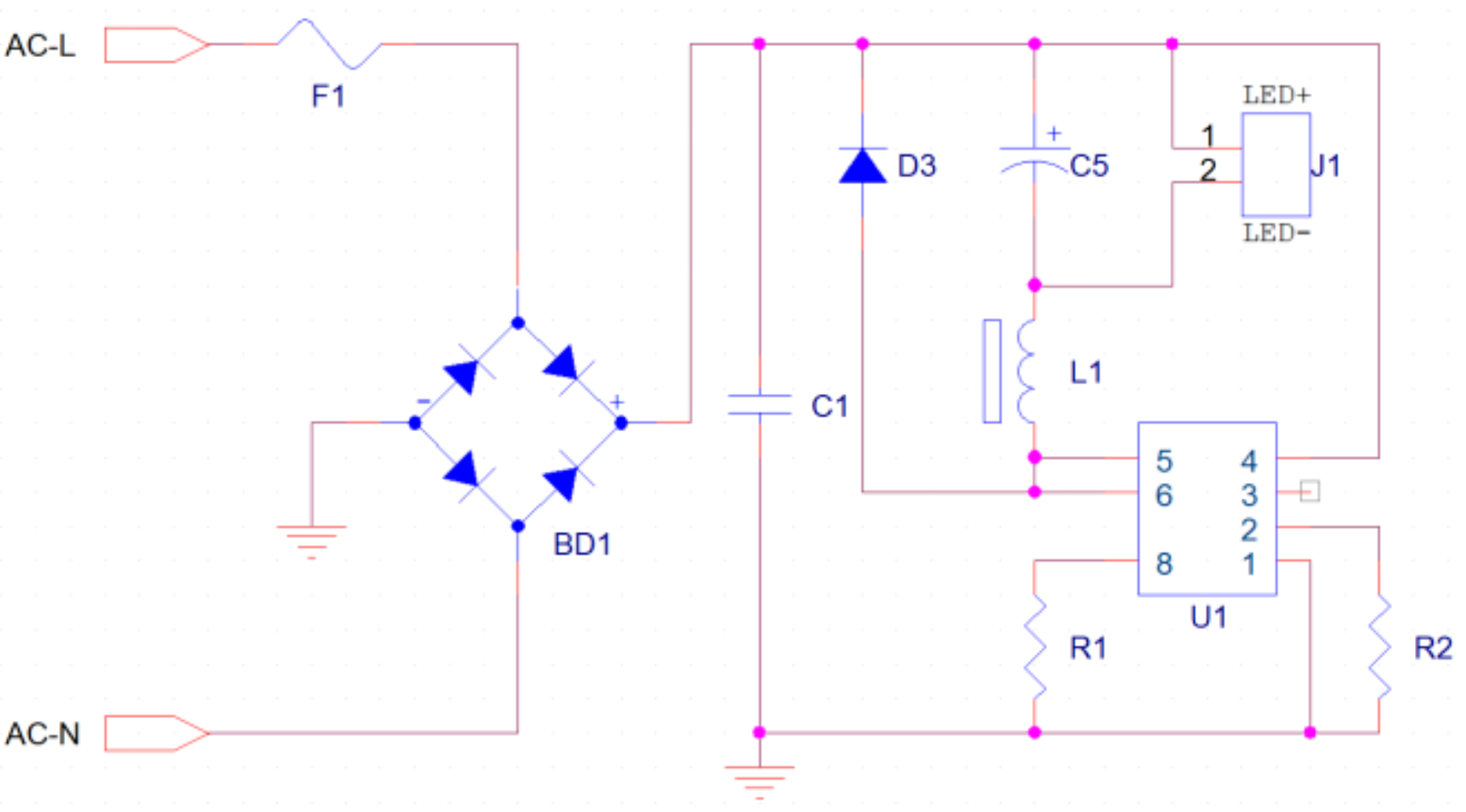
Component Selection: For D3, select a voltage rating of 500V or 600V, with the current rating determined by the specific load. Commonly recommended World Industrial models include ES1J, ES2J, and ES3J.
Target Applications: LED globe bulbs, fluorescent lamps, and spotlights.
2. Isolated Flyback Power Supplies — Secondary Rectifier Diode (D2)
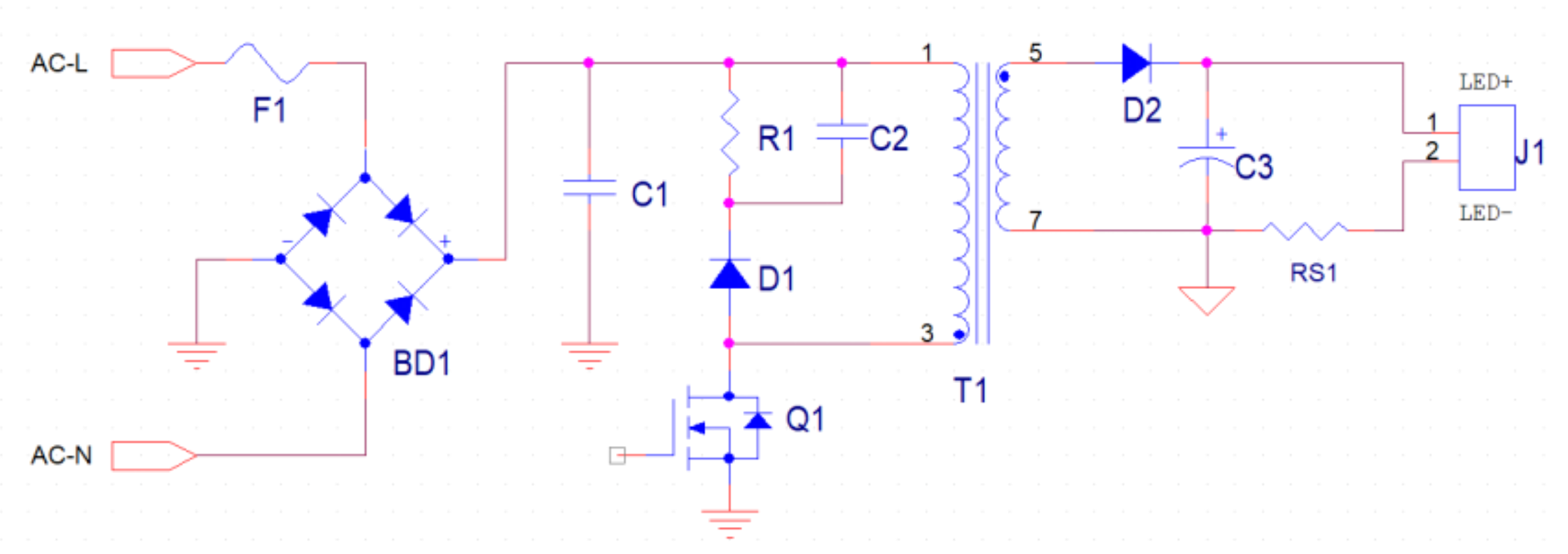
Component Selection: The D2 specification is determined by the transformer turns ratio and the specific current/voltage requirements of the LED lamp. For example, for a 30V~42V / 300mA output, the World Industrial model ES3GB is highly recommended.
Target Applications: Downlights, panel lights, indoor lighting, outdoor lighting, and commercial lighting.
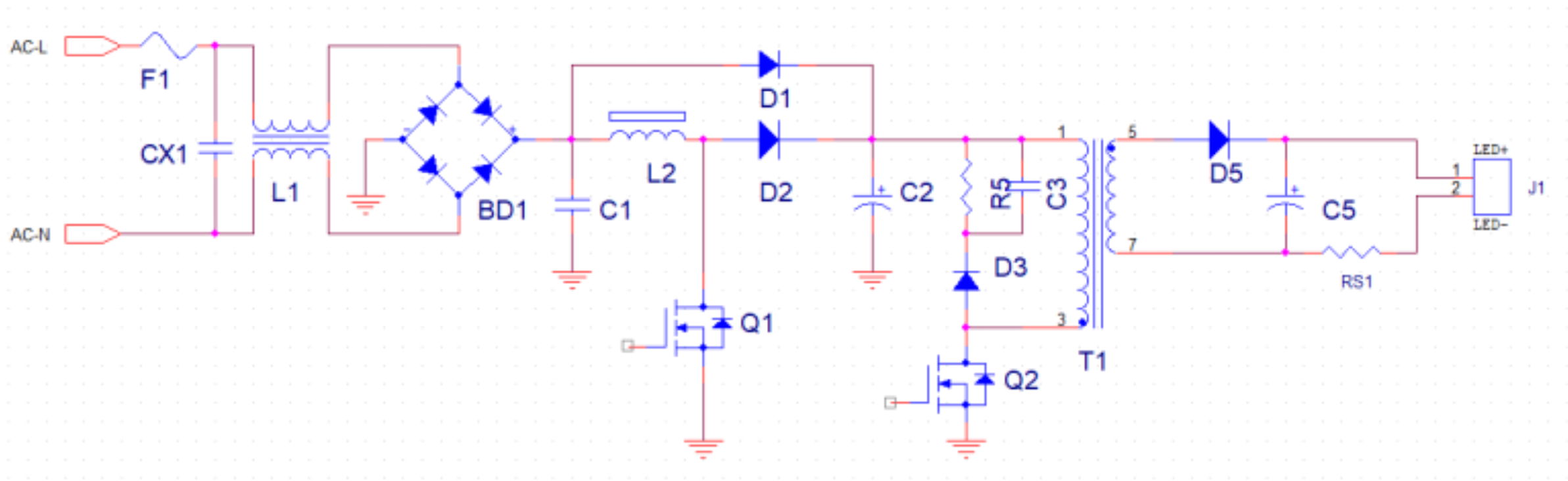
Component Selection: D2 (Boost Diode) for Critical Conduction Mode (CRM), select a fast recovery diode with a reverse recovery time (Trr) of approximately 35ns and a 600V voltage rating. For Continuous Conduction Mode (CCM), select a 600V fast recovery diode with a Trr < 25ns. For 80W–120W applications, the World Industrial model MUR460 is recommended; for 150W–300W applications, the MURE8R60ACT is ideal.D5 (Secondary Rectifier Diode) selected based on the output voltage and current. For 42V–60V outputs, World Industrial's 400V+ products such as MUR1040ACF, MUR1640CTF, and MUR2040CT are highly recommended.
III. Product Portfolio
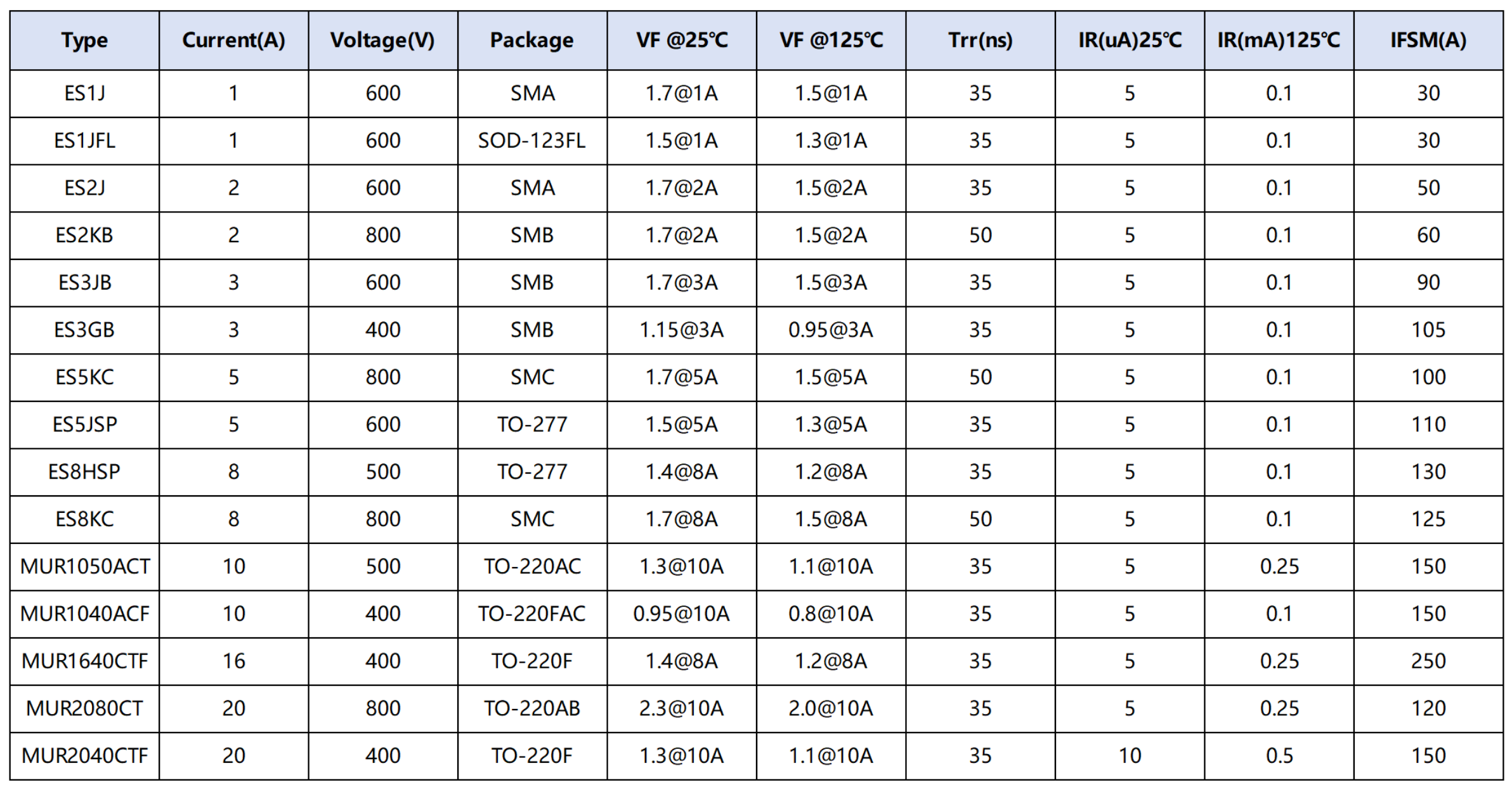
Shenzhen World Industrial Co., Ltd. provides a comprehensive portfolio of fast recovery diodes to meet diverse power and application requirements. Below are some of our classic models: